Clinical trials as a blockchain use case
Timestamping, protocol amendment tracking, and pre-registered analysis plans in trial workflows.
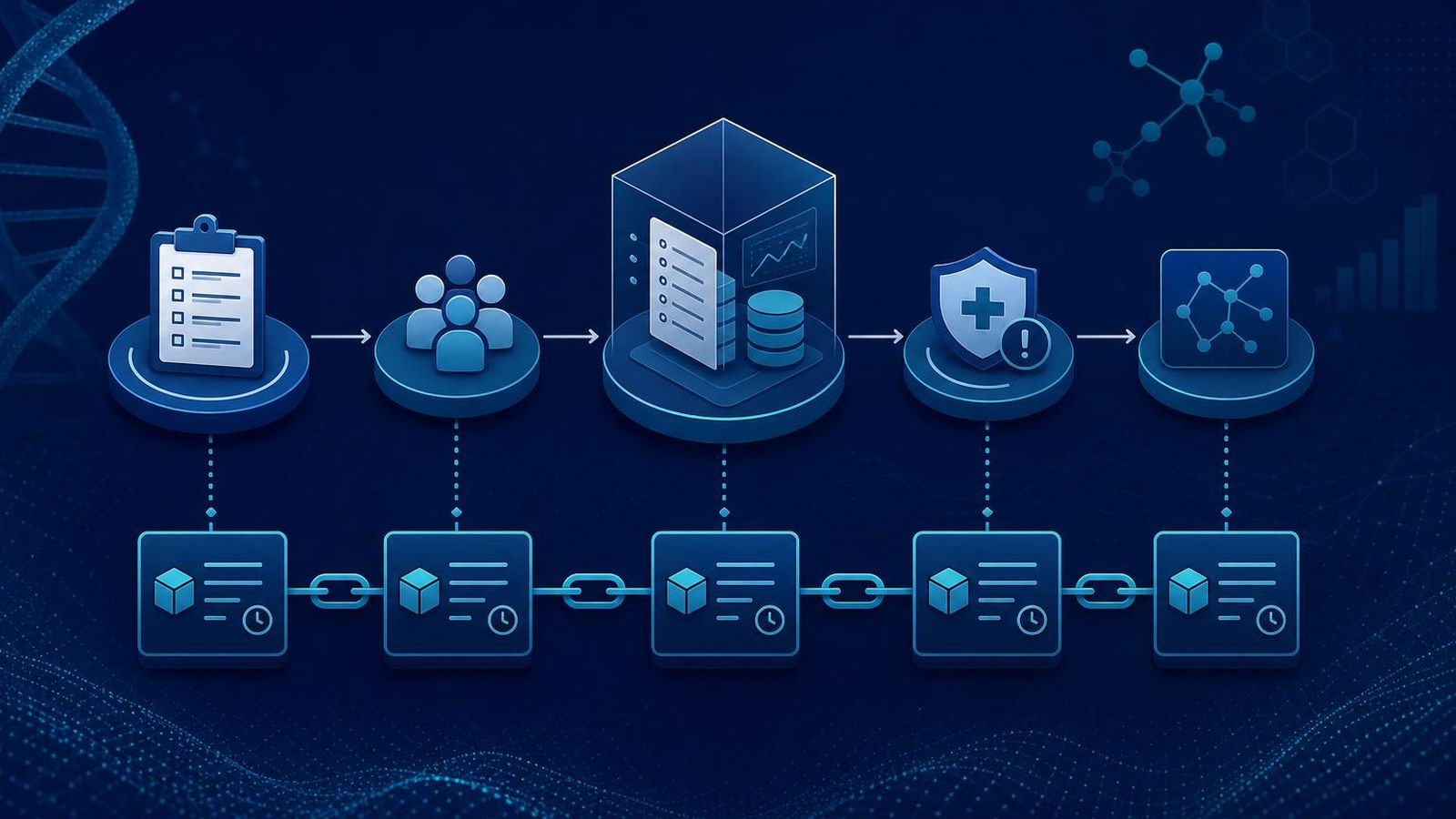
What this use case covers
Clinical trial projects in the directory are those whose ledger-backed components support trial integrity. The work typically clusters around three patterns: trustworthy timestamping of data capture, versioned protocol and amendment tracking, and pre-registration of analysis plans before unblinding.
What works in practice
The fit is genuinely good for the timestamp and pre-registration patterns. The artefacts committed to the chain are small. The verification is straightforward. The benefit, inspectable integrity claims, is something the field has been asking for. The fit is also good in multi-site and cross-jurisdiction trials, where the shared log gives parties a common reference without requiring prior trust.
What ledgers do not replace
A trial's integrity comes from its quality system, its monitoring, and the discipline of the people running it. The ledger supports the claims those activities produce. It does not generate them. Projects that frame the chain as a substitute for the operational discipline are claiming something the technology does not deliver.
Operational considerations
Trial-side projects have to handle versioning, amendments, deletions where required, and the privacy posture of source data. Source data verification, monitoring, and post-trial reporting continue to use the existing tooling. The ledger sits alongside that tooling, not in place of it.
Directory posture
Trial integrity tooling is one of the better-formed use cases in the field. Confidence labels reflect deployment maturity. Projects that have operated on real trials are categorised differently from projects with only pilots, and projects with only pilots are categorised differently from projects with only proposals.